AI Has the Potential to Improve Cancer Research and Treatment
An estimated 610,000 people in the United States died from cancer last year. That is almost the same amount of people who died in the country’s four-year civil war. At least two million more people were diagnosed with some form of cancer in 2024, a figure that has climbed in recent years. Early detection remains one of the single biggest factors that determine whether or not someone ultimately survives cancer and, luckily, advances in medical treatment can help. Researchers and medical scientists believe artificial intelligence models could play a key role in that early detection process. Though AI still cannot substitute for a doctor’s real-world medical expertise or even produce a true medical diagnosis, it can serve as a critical tool to make them more effective.
Artificial intelligence’s ability to parse through dense troves of data and seek out patterns may make it well-suited to look for irregularities in images of organs and tissue and spot cancerous cells before they metastasize. A recent study that was published in the journal Nature by researchers at Columbia University described a new medical AI model that they say accurately predicts the activity of genes at the cellular level. In theory, this level of granularity could open up new paths for researchers to understand the gene mutations that cause cancers to occur in the first place. Today, doctors are already using AI to help spot tumors and expedite diagnoses. Scientists and pharmaceutical companies are similarly using the technology in varying degrees to assist with the creation of new cancer-fighting therapeutics. And while AI almost certainly will not replace trained oncologists anytime soon, all signs are pointing toward a near future where these models play an increasingly present role in combating cancer, from the earliest moments to late-stage treatment.
The Columbia researchers developing the AI capable of predicting gene activity, referred to as GET (general expression transformer) say they trained their model on images of 1.3 million cells. The researchers compared this process of injecting large training data of both diseased and healthy genes as similar to the way Open AI’s ChatGPT large language model ingests a vast amount of the written internet. Once the medical AI model had learned the “grammar in many different cellular states,” it could be directed to predict patterns based on that information. When they tested the AI, researchers said it was able to predict certain gene expressions in cell types it had never seen before.
This comes after scientists at Harvard Medical School described another cancer-related AI detection tool, also in Nature. In that example, researchers trained their model to detect signs of 19 different types of tumors after observing medical patient images. The model was reportedly able to detect cancer and predict a tumor’s molecular profile all based on cellular features included in its training data. It could also forecast a patient’s survival potential across different cancer types. The model, called CHIEF (Clinical Histopathology Imaging Evaluation Foundation) was trained on 60,000 whole-slide images of tissues from lungs, prostates, colons, and other organs. Researchers said CHIEF went a step further than other cancer-detecting AI models due to its broad training data which lets it interpret a medical image more holistically than other more specialized models.
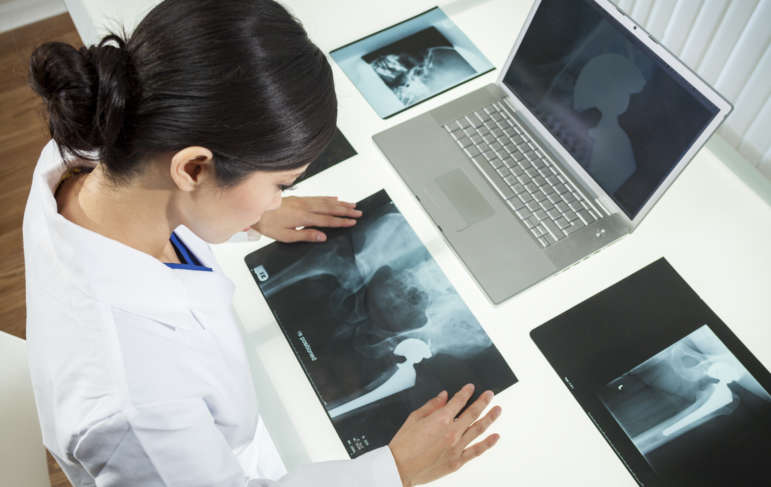
The promise of AI for cancer treatment broadly falls into five categories: prediction, detection, drug discovery, and treatment implementation. On the detection front, radiologists and other doctors are already using AI tools to help spot tumors. Just this week, a new study published in Nature Medicine involving nearly 500,000 patients in Germany found that doctors using AI detection models confirmed more cases of breast cancer than doctors acting on their own. Specifically, doctors using the AI achieved a cancer detection rate 17.6 percent higher than those who didn’t. The FDA has also already approved marketing for an AI software design to help identify signs of prostate cancer.
A separate AI model created by researchers at the National Institutes of Health (NIH) called LORIS (logistic regression-based immunotherapy-response score) demonstrated the ability to predict which group of cancer patients might benefit best from certain immunotherapy treatments. That approach, which uses the body’s immune system to target cancer cells, is less invasive than more traditional cancer-fighting treatments like chemotherapy and radiotherapy but is only effective for a subset of people. Models like LORIS could help doctors better detect those therapies for patients who may benefit and simultaneously avoid exposing others to unnecessary treatments.
On the discovery front, researchers from the University of Chicago Medicine Comprehensive Cancer Center (UCCCC) recently received $16 million from the federal government as part of a project to use powerful machine learning models to comb through large medical datasets and look for patterns that could spark the development of new treatments for drug-resistant cancers. The hope, according to those involved with the efforts, is that advances in AI can fast-track the time it takes to find new drugs, hopefully in time for patients who may need them in the near future. Patients with cancer do not have time to wait for new treatments, so there is a strong need to compress the drug discovery timeline, and the aim is to use novel synergistic approaches that take advantage of The Department of Energy’s supercomputing abilities.
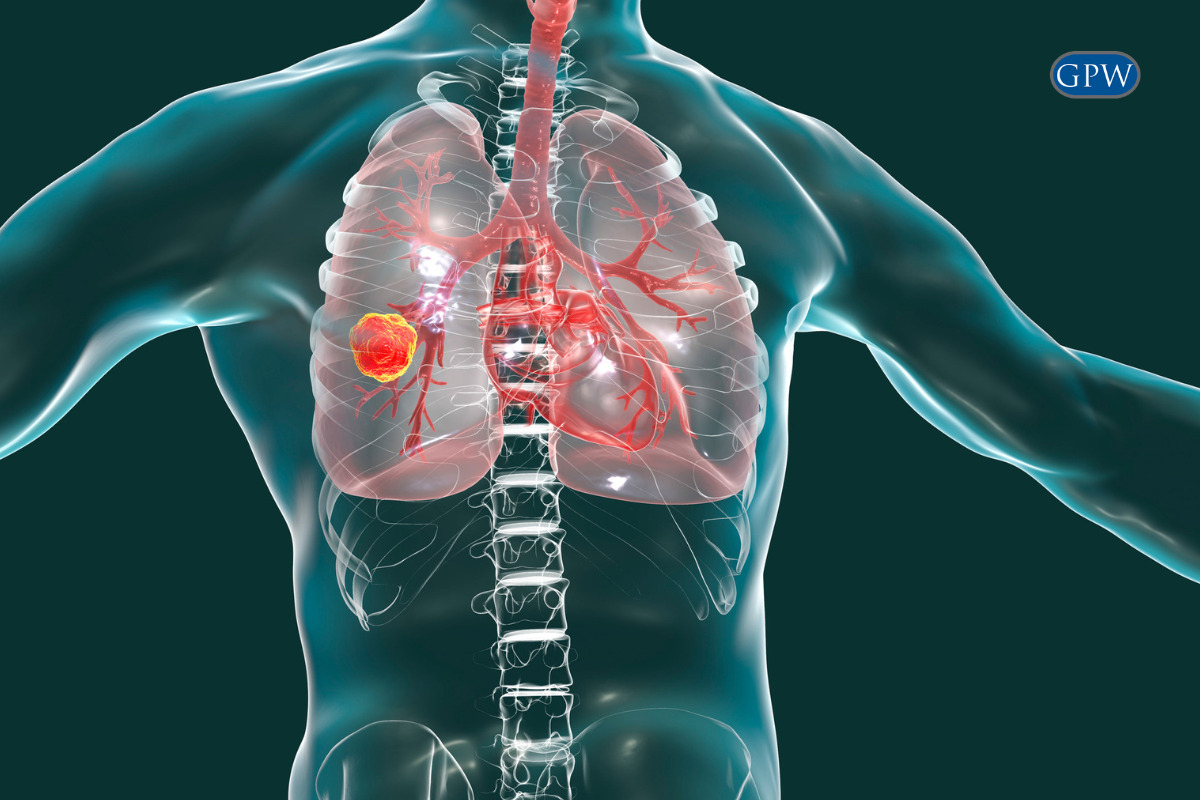
AI has the ability to greatly improve lung cancer and mesothelioma treatment. Models can be trained with images of mesothelioma and lung cancer, allowing the AI to quickly detect mesothelioma and lung cancer cases that doctors may not be able to detect. AI could also help determine who benefits from immunotherapy and other types of treatments. Cancer treatment is very nuanced, and AI has the ability to cut through this and could help determine what cancer treatment is best for each specific cancer case. Mesothelioma is usually caught at a late stage, so AI could help detect cancer much earlier, helping patients live longer and healthier lives. AI is an effective tool that will greatly benefit those struggling from asbestos-related cancers like mesothelioma and lung cancer.
There is a risk of placing too much faith in AI screening and detection tools too quickly. Several of the models noted earlier are research phases and will require more testing before they are deployed in healthcare facilities at scale. There is also the risk of an opportunist taking advantage of the overly broad umbrella term “AI” to pitch far less tested models as more effective than they actually are. There are already numerous cases of people receiving wrong and potentially dangerous incorrect diagnoses after interacting with popular large language models. One study published in JAMA Pediatrics last year found that OpenAI’s ChatGPT incorrectly diagnosed 83 percent of pediatric case studies it was presented with. Models like these are also prone to occasionally hallucinating false facts and doing so with a confident tone. That can lead to funny results when asking it to come up with a cake recipe, but those same inaccuracies can prove dangerous when someone uses them to self-medicate.
And even as AI models (likely) improve their ability to detect different cancers in the years to come, they still fundamentally are not performing the same job as a trained physician. As New York University journalism professor Meredith Broussard notes in her 2023 book More Than a Glitch, even the most advanced AI models are essentially comparing a static image against a vast amount of other images already labeled by humans and quickly seeing if there are mathematical similarities in the two. That can lead to impressive results, but the process is ultimately a prediction which is not the same as a diagnosis. A diagnosis still requires a human doctor who can look over evidence and draw their own expert conclusion based on years of real-world experience. We are already living in a world where doctors can use these tools to bolster their own abilities. It is less clear though whether or not AI will ever be reliable enough to remove doctors from that dynamic entirely.
Were you diagnosed with mesothelioma or lung cancer after working with asbestos? Contact us today to see if you could be entitled to compensation. Call 412-471-3980 or fill out our contact form and a member of our team will get back to you to review your case.