Union Carbide in West Virginia: A Legacy of Industry and Asbestos Exposure
For much of the twentieth century, Union Carbide Corporation stood as one of the most significant industrial employers in West Virginia. Its plants shaped the economy of the Kanawha Valley, drew thousands of workers into chemical manufacturing, and helped establish the region as a national center of the petrochemical industry. However, the very facilities that provided steady employment for generations of West Virginians also exposed countless workers to asbestos, a known carcinogen that causes mesothelioma, asbestosis, lung cancer, colon cancer, and throat cancer.
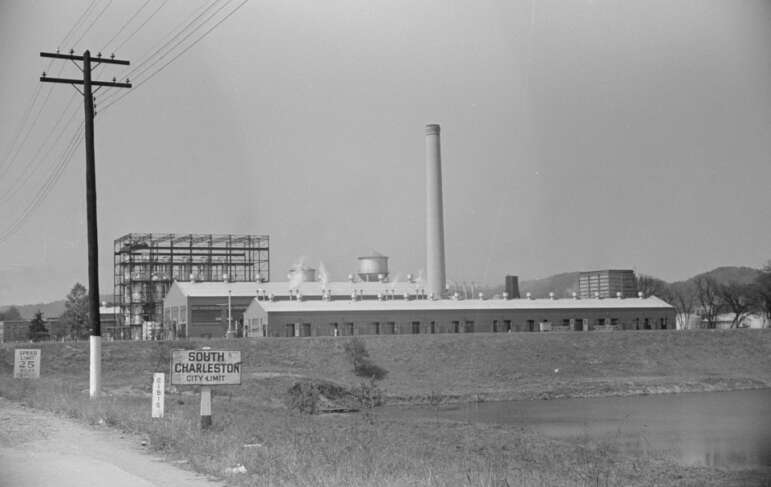
Union Carbide constructed what is widely regarded as the world’s first petrochemical plant in Clendenin, West Virginia in 1920. Drawn by the region’s abundant gas, salt brine, coal, and access to river and rail transportation, the company quickly expanded. By 1925, operations had outgrown the Clendenin site and were relocated to South Charleston, where Union Carbide built a complex that eventually covered the mainland and most of Blaine Island in the Kanawha River.
The company continued to grow through the following decades. In 1947, Union Carbide acquired the Institute plant, a facility originally built by the federal government during World War II to produce synthetic rubber for the war effort. In 1949, the company opened a Technical Center in South Charleston that became its worldwide research and development hub. At its height, Union Carbide employed roughly 12,000 people in West Virginia and ranked among the largest employers in the state.
Union Carbide’s West Virginia operations were built to manufacture chemicals and plastics on an enormous scale. Over time, the company’s facilities produced hundreds of different chemicals and plastics, including ingredients for antifreeze, batteries, and countless consumer goods. The Institute plant later shifted toward specialty chemicals and agricultural products, including pesticide intermediates.
This concentration of chemical manufacturing earned the Kanawha Valley the nickname “Chemical Valley,” and South Charleston became known locally as “Chemical City.” The plants ran continuously, relied on high-temperature processes, and required extensive networks of piping, reactors, boilers, and storage equipment. It was precisely this industrial environment that placed workers in close and repeated contact with asbestos.
Like nearly every large chemical plant of its era, Union Carbide’s West Virginia facilities relied heavily on asbestos. The material was valued for its resistance to heat, fire, and chemical corrosion; qualities that made it seem ideal for the demanding conditions inside a chemical plant. Asbestos insulation wrapped the miles of piping that carried steam and chemicals throughout the plants. It covered boilers, furnaces, heat exchangers, reactors, and storage tanks to control the intense heat generated by chemical processes. Refractory materials and asbestos gaskets sealed flanges and high-pressure connections, while braided asbestos rope packed valves and pumps to prevent leaks. Even the protective clothing issued to workers, including gloves, aprons, and blankets, often contained asbestos fibers.
These materials posed the greatest danger when disturbed. Cutting, sanding, tearing, or replacing insulation released microscopic fibers into the air, which could be inhaled by anyone working nearby.
The risk of asbestos exposure at Union Carbide’s plants was not limited to a single trade. Insulators who applied and removed asbestos lagging faced some of the heaviest exposure of any occupation. Pipefitters and plumbers worked around insulated lines, gaskets, and valve packing. Boilermakers repaired and maintained boilers coated in asbestos materials. Maintenance workers and mechanics disturbed asbestos during routine repairs.
Machine operators, electricians, and laboratory technicians also encountered asbestos in equipment, wiring, and building materials. Even workers who never handled asbestos directly were exposed when nearby maintenance released fibers into shared work areas. Family members faced a secondary risk as well, inhaling fibers carried home on contaminated work clothing.
Because asbestos-related diseases have a latency period that often spans decades, many former Union Carbide workers were not diagnosed until long after they retired. Illnesses such as mesothelioma, asbestosis, and lung cancer continue to surface among those who spent their careers in the Kanawha Valley’s chemical plants.
If you or someone you love worked at a Union Carbide facility in West Virginia and was diagnosed with mesothelioma, asbestosis, lung cancer, colon cancer, or throat cancer, you may be entitled to compensation. For more than 40 years, the attorneys at Goldberg, Persky & White, P.C. have represented workers and families harmed by asbestos exposure, holding the manufacturers who supplied these dangerous products accountable. We understand the history of these plants, the equipment used inside them, and the trades that placed workers at risk, and we put that knowledge to work for our clients.