
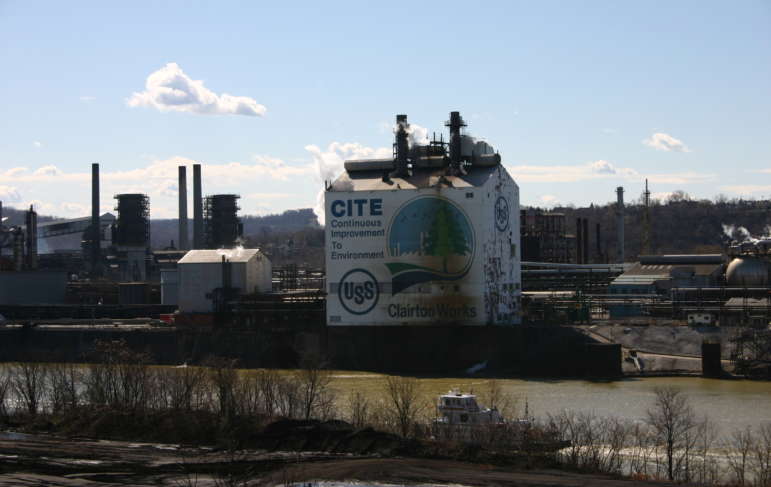
Cause of Deadly Explosion at Clairton Coke Works
The failure of a gas valve may have led to the deadly explosion at Clairton Coke Works earlier last week. Flushing was part of planned maintenance at the massive facility. Pressure built inside the valve, leading to valve failure and coke gas filling the area. It ultimately exploded when it found an ignition source. The investigation is in early stages, so information is still coming out. The company said that it is working with the United Steelworkers union, local, country, and state agencies and third-party experts on the investigation. Two workers were killed, and 10 workers were injured when the explosion ripped through the plant, sending a plume of black smoke into the air that could be seen across the nearby area.
The two workers killed in the blast were 39 and 52. Five people had to be transported to area hospitals in critical condition and five others were treated and released from Jefferson Hospital on Monday afternoon. As of last Friday, three victims remained in critical condition at UPMC Mercy. During a news conference earlier last week, an executive said workers at the time of the explosion were charging ovens and pushing coke out of them, part of normal plant operations.
Accidents are not new at Clairton Coke Works. An explosion in February injured two workers. In June, a breakdown of the plant lead to a rotten egg odor in the air around it from elevated hydrogen sulfide emissions. U.S. Steel has been forced to pay $57 million in fines and settlements since January 1, 2020 for problems at the Clairton plant. An engineer for environmental groups found that there was no indication that U.S. Steel had an effective, comprehensive maintenance plan for the Clairton plant. He claimed that the plant is inherently dangerous because of deficient maintenance and defective design.
The plant is considered the largest coking operation in North America. With the blast furnace and finishing mill up the Monongahela River, it is one of a handful of integrated steelmaking operations in the United States. The explosion is bringing up questions about how Nippon Steel, which recently acquired U.S. Steel, will approach the Mon Valley plant. U.S. Steel’s Mon Valley plants are relics of steelmaking’s past. In the early 1970s, U.S. steel production led the world and was at an all time high due to 62 coke plants that fed 141 blast furnaces. A new blast furnace has not opened un the U.S. in decades, as foreign competition devastated the American steel industry and coal fell out of favor. Blast furnaces won’t entirely go away since they create metals favored by automakers, appliance makers, and oil and gas exploration firms.
Were you exposed to a deadly substance like asbestos while on the job? Contact us today to see if you could be entitled to compensation. Call 412-471-3980 or fill out our contact form and a member of our team will get back to you as soon as possible.